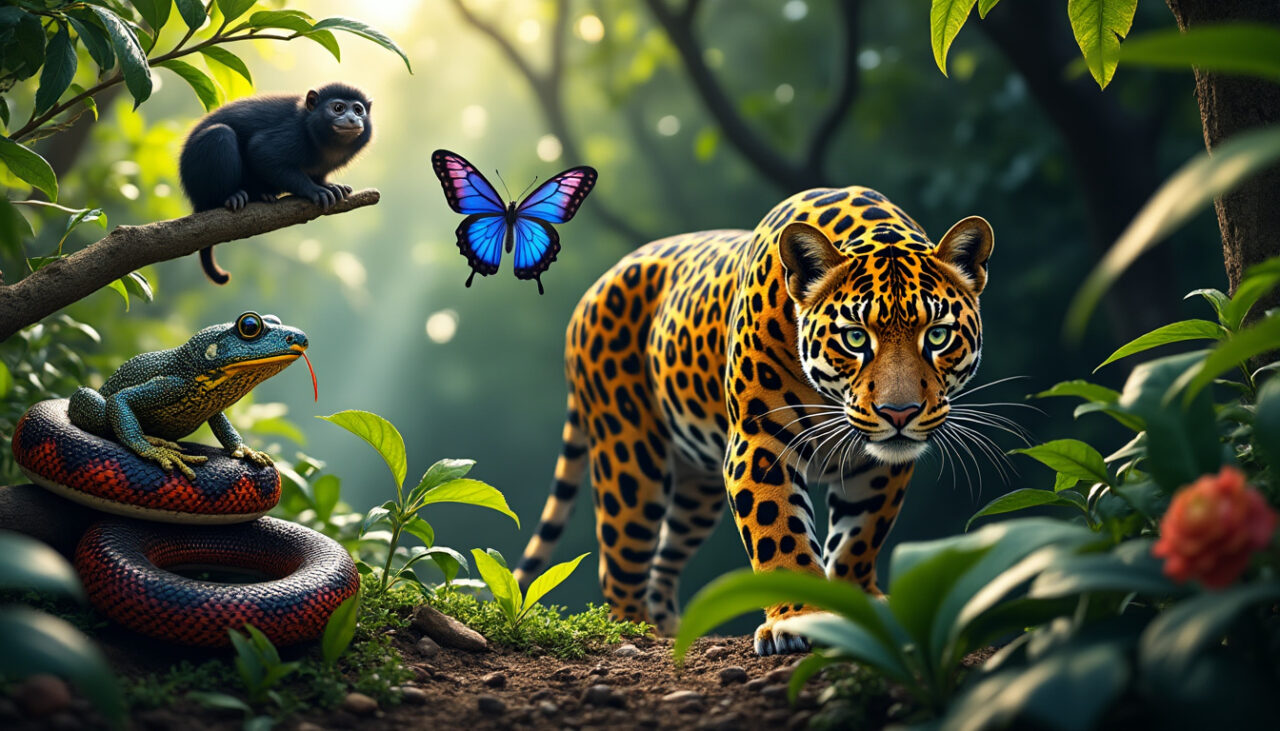
The most dangerous animals in Costa Rica
Ah, Costa Rica, this little piece of paradise where nature is full of wonders! But don’t get too carried away by the charm of its enchanting landscapes, as beneath this idyllic façade lies a wildlife that is anything but tranquil. Get ready to encounter creatures that your travel guide wouldn’t dare mention! From venomous spiders to fearsome snakes, not to mention crocodiles and other aquatic delights, here’s an overview of the most dangerous animals in Costa Rica. Ready to tremble?
IN SHORT
|
- Spiders: Black widow and brown recluse, potentially harmful venoms.
- Snakes: Fer-de-Lance and coral snake, capable of causing serious envenomations.
- Crocodiles: American crocodile, a discreet giant with powerful jaws.
- Amphibians: Dendrobates frogs, some produce deadly toxins.
- Fish: Stonefish, very venomous and hard to spot in the waters.
Costa Rica, often celebrated for its biodiversity and breathtaking landscapes, is home to a multitude of fascinating yet dangerous animals. From venomous spiders to fearsome reptiles, this Central American country demands heightened vigilance. Let’s explore together the most concerning creatures you might encounter during your adventures.
Spiders and Scorpions: Small Creatures but Real Dangers
Ah, spiders and scorpions, these little creatures remind us that not everything that glitters is gold… Venomous spiders, such as the black widow, pose a danger with their fearsome venom. Although they prefer to remain discreet, a bite can cause intense muscular pain and cramps. No need to panic, fatal cases are rare, especially with quick treatment. On the other hand, the brown recluse, also known as the violin spider, is not to be taken lightly. Its venom can cause severe skin lesions, perfect for those who love scars.
And what about the scorpions? These beasts hiding under stones or in dark corners can sting without warning. While most stings are not fatal for healthy adults, a bit of pain, nausea, and potentially a medical consultation are in order. It’s well-known, who doesn’t love a good time in the hospital?
Snakes: Discreet but Feared Predators
Let’s talk about snakes, these creatures that seem to come straight out of nightmares. The fer-de-lance is undoubtedly the most feared in Costa Rica. This venomous snake, responsible for numerous human bites, can give you a good scare with its hemotoxic venom. If you thought that quick medical treatment would be enough to avert disaster, congratulations, you are right!
Less common but just as dangerous is the coral snake, recognizable by its bright colors. Be careful, color isn’t everything; its venom can cause severe paralysis. Remember the saying: red on yellow kills a fellow, red on black… well, don’t trust it either!
Crocodiles and Caimans: Kings of Rivers and Swamps
The rivers of Costa Rica also house fearsome aquatic predators. The American crocodile, with its incredible power, makes you think twice before diving. While humans are not often its prey of choice, one should not underestimate its ability to make a swim memorable for all the wrong reasons. As for the spectacled caiman, this little fella cleverly hides in the swamps and comes out at night to hunt. In this case, it’s best to avoid nighttime strolls near the water.
Toxic Amphibians: Small Frogs with Powerful Venoms
The dendrobates, or poison frogs, present a fascinating beauty but at your own risk. Their venom can be deadly when ingested, even though they are not dangerous to touch. Your vacation memories can quickly turn into something unexpected, so keep your hands to yourself.
Sharks: Caution in Coastal Waters
The coastal waters of Costa Rica are not free from aquatic dangers, with several species of sharks lurking. The bull shark is known for its unpredictable behavior, especially in shallow areas. If you like to swim, choose your beaches wisely and be aware of the calls of the sea.
Don’t be too confident though, as the tiger shark can also show up during your aquatic incursions. Although attacks are rare, it’s better to take a few precautions while swimming. What could be more boring than encountering a shark while you’re lounging around?
Marine Dangers: Caution in Tropical Waters
Take a look at the tropical waters and you’ll discover wonders, but also marine dangers. The stonefish, for example, is known for its deadly venom and perfect camouflage. Staying vigilant is your best guarantee to avoid unbearable pain.
Finally, don’t forget about the stingrays and their fearsome stingers. They are generally not aggressive, but it’s best to avoid stepping on them. A sting could leave you with far too painful memories for your next vacation.
Dangerous Insects: Beware of the Little Creatures
If that’s not enough, what about mosquitoes? Nocturnal musicians but carriers of diseases. They are probably the most silent dangers, spreading viruses like dengue. Who doesn’t love a little tropical flu?
Ants, especially army ants and bullet ants, deserve a special mention. Their bites are known to cause extreme pain. Dare to camp in areas where they roam, and you’ll be treated like a fruit to snack on.
Felids: Powerful but Discreet Predators
The felids of Costa Rica, such as the jaguar and the puma, primarily live in wooded areas. Although they are discreet, their presence can send shivers down your spine. Encounters with these magnificent human predators are rare, but still possible. Remember to keep your distance; these kings of the jungle do not hesitate to protect their territory.
Costa Rica, a biodiversity haven, is home to a variety of fascinating animal species, but some of them can be particularly dangerous. Whether on land or in water, it is important to stay vigilant while exploring this beautiful Central American country. Among the fearsome creatures are venomous spiders such as the black widow and the brown recluse, which can cause serious injuries if they feel threatened. These little creatures are often discreet and hide in dark places, adding a thrill to the adventure.
Snakes, particularly the fer-de-lance and the coral snake, also require close attention as they are known for their potentially lethal venom. Although they generally avoid humans, bites can occur if one is not cautious. The crocodiles and caimans pose another danger, especially near rivers and estuaries, where their aquatic agility makes them almost invisible until it’s too late.
In the coastal waters of Costa Rica, the sharks, although generally shy, should not be ignored either. Their unpredictable behavior makes them potentially risky companions for a swim or dive. Let’s add to that the disease-carrying insects, which represent a discreet but serious threat. Mosquitoes are known to carry infections that could affect your vacation.
Observing these animals in their natural habitat remains an unforgettable experience. By taking precautions, it is possible to enjoy this experience while respecting the fascinating and, let’s admit it, somewhat frightening local wildlife. Costa Rica remains a must-visit destination, as long as the traveler stays alert.
FAQ on the Most Dangerous Animals of Costa Rica
What are the dangers associated with spiders and scorpions in Costa Rica?
Costa Rica is home to several species of arachnids, including the black widow and the brown recluse, whose bites can be painful and lead to complications. Scorpions, while rarely fatal, can cause intense pain and other symptoms.
How can I avoid spider and scorpion bites?
To minimize risks, shake out clothing and shoes before putting them on, use gloves when handling wood, and regularly check dark corners of dwellings.
What dangerous snakes can be encountered in Costa Rica?
Among the most feared snakes are the fer-de-lance, whose venom is hemotoxic, and the coral snake, which has a neurotoxic venom. Other snakes, such as the rattlesnake and the fimbriated viper, are also present.
Are crocodiles and caimans really dangerous?
Yes, the American crocodile and the spectacled caiman can pose a danger, especially in areas where swimming or fishing is common. While they typically do not hunt humans, their size and strength are impressive.
What are the dangers of amphibians in Costa Rica?
Dendrobate frogs produce powerful toxins. Some species can be deadly if their venom is ingested, even though they are not dangerous to touch.
What fish and other marine creatures pose a risk?
The stonefish is one of the most venomous fish in the world, and stingrays can sting their victims. Moray eels, while not venomous, can inflict serious bites.
Do insects in Costa Rica pose a health risk?
Yes, some mosquitoes carry diseases like dengue and zika. Others like bullet ants can cause extreme pain if they bite you.
What feline predators should be watched out for in Costa Rica?
The jaguar, puma, and ocelot are all present. While they generally avoid humans, their power and agility make them animals to be respected.