
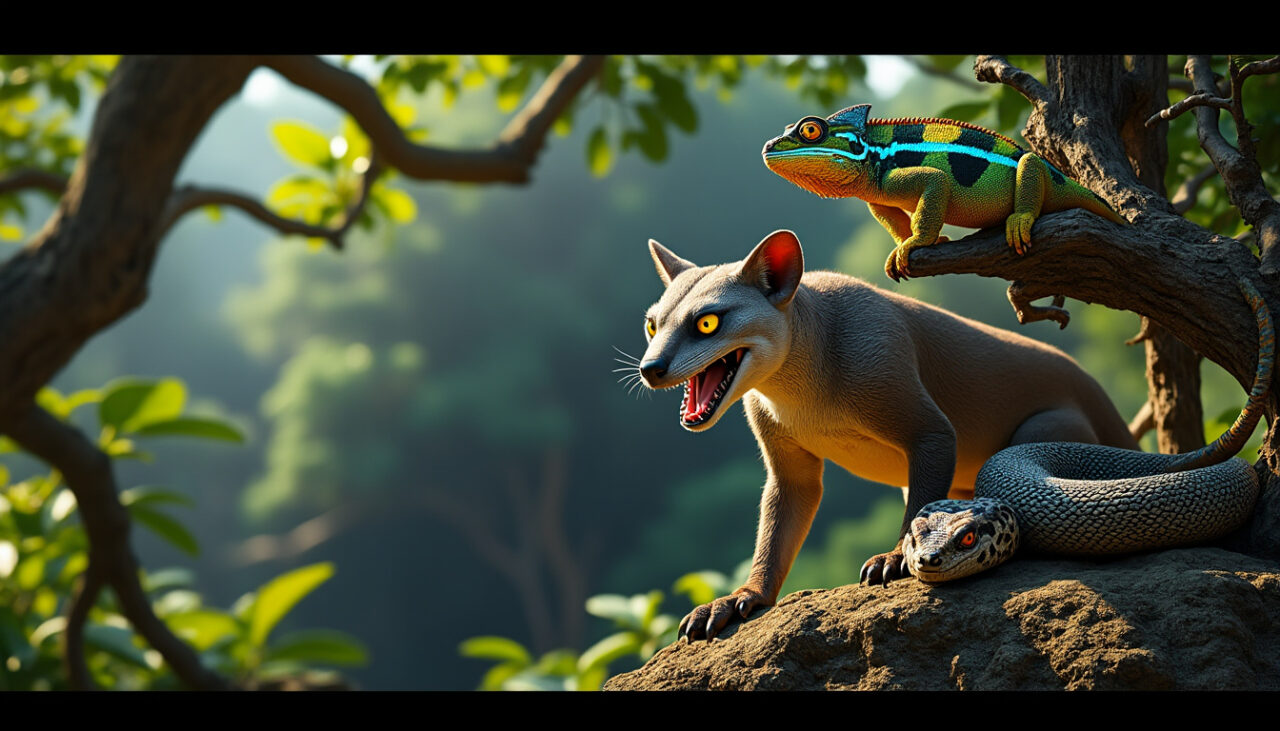
The most dangerous animals of Madagascar
Welcome to Madagascar, this mysterious island where biodiversity coexists with dangerous animals that might make you regret leaving your sofa. From a Nile crocodile ready to make you its next meal, to cannibal spiders and scorpions with menacing pincers, the Malagasy wildlife is sure to send shivers down your spine. Get ready for an exciting and unpredictable journey into the dangers of this island adventure.
IN SHORT
|
- Nile crocodile – The terror of rivers, known for its fierce appetite.
- Fossa – A formidable and agile predator, rival of the lemur.
- Black widow spider – A fascinating but venomous spider to avoid.
- Scorpion – With its impressive pincers, it is the master of dry regions.
- Madagascar tubular snake – A venomous snake, very discreet yet notoriously dangerous.
- Mosquito – The smallest but the most dangerous, responsible for serious diseases.
In Madagascar, a true paradise of biodiversity, creatures whose danger should be taken seriously thrive. From venomous reptiles to bloodthirsty insects, the island is rife with animals that can turn a lovely hiking day into a… perilous adventure. Here’s an overview of the most formidable animals you might encounter in this fascinating land.
Nile Crocodiles: The Kings of the Rivers
Let’s start with the undisputed king of the Malagasy waters, the Nile crocodile. Feared and revered, this predator can reach impressive sizes. Throughout rivers, lakes, and mangroves, it is a formidable hunter. If you thought you could swim peacefully, you might be better off keeping your distance.
Fossa: The Iconic Predator
Meet the fossa, a carnivorous mammal that resembles a small puma. This agile beast is the main hunter of lemurs, but don’t be fooled: its sharp claws and powerful jaws make it a true danger. Encounters with the fossa don’t always end in song.
Spiders and Scorpions: The Invisible Killers
The small creatures can also be formidable here. Among them, black widow spiders and scorpions stand out. Although tiny, they should not be underestimated. Malagasy scorpions, which can grow up to 20 cm, add a small dose of chills to your stay.
Venomous Snakes: A Danger Not to Be Ignored
Madagascar is home to nearly 100 snake species, some of which are venomous. The Madagascar tubular snake and the northern bongainvillea are among the most dangerous. If you have a soft spot for snakes, consider avoiding close contact – the venomous nature of these specimens could ruin your trip.
Mosquitoes: The Real Assassins
Surprisingly, the mosquito, far more than just a little bite, is often considered one of the most dangerous animals. By carrying diseases like malaria and dengue, these tiny creatures are responsible for many tragedies. Ultimately, this little beast can do much more damage than a hungry crocodile.
Other Beasts to Watch Out For
Let’s not forget the large lizards, like the giant day gecko and the spiny-tailed iguana, which can show their teeth if provoked. Even the tomato frog from Madagascar, although cute, is not free of danger. These animals may seem harmless but beware of surprises in nature.
Prepare for Adventure
Before venturing on the island, it is wise to gather information and prepare yourself well. And if you’re looking for a change of scenery, why not also read about dangerous animals in Punta Cana or discover tips to avoid dangerous animals in the Canary Islands? Madagascar is exciting, but be prepared to meet its unwelcoming inhabitants.
Discover the Dangerous Animals of Madagascar
Madagascar is renowned for its unique biodiversity, but its territory is also home to dangerous animals. Among them, the Nile crocodile stands out as one of the most feared. Found in rivers and lakes, it remains a formidable predator, capable of surprising even the most cautious. It is revered to some extent among locals, but that does not detract from its status as an animal to avoid.
The fossa, a small carnivore that resembles a mix between a puma and a mongoose, is another animal to keep a close eye on. While it is not venomous, its speed and hunting ability can be concerning for anyone venturing into its territory. Spiders, especially the black widow, and scorpions, known for their venom, add a touch of anxiety for those exploring the wild areas.
It would be negligent not to mention mosquitoes, considered the true champions of danger. They carry serious diseases like malaria and dengue, making them a silent threat to any unwary traveler. Madagascar has not only fascinating animals; it also has a handful of creatures that deserve much greater respect.
The island is also home to reptiles such as the Madagascar boa and exceptionally colorful geckos that, while harmless, contribute to the complex picture of Madagascar’s fauna. Preparing your trip with a good knowledge of these species can transform a potentially perilous adventure into an enriching experience. Who knows, perhaps encounters with these animals will enhance your journey far more than expected.
FAQ about the Most Dangerous Animals in Madagascar
What are the most dangerous animals in Madagascar?
The most dangerous animals in Madagascar include the Nile crocodile, the fossa, the black widow spider, the scorpion, and several venomous snakes such as the Madagascar tubular snake.
Is the mosquito considered a dangerous animal in Madagascar?
Yes, the mosquito is often classified among the most dangerous animals due to the serious diseases it transmits, such as malaria, dengue, and chikungunya.
Where can you encounter the Nile crocodile in Madagascar?
The Nile crocodile, known as voay, is mainly found in rivers, lakes, and mangroves, particularly in certain regions of the North and West of the island.
Is the fossa really dangerous?
Yes, the fossa is a formidable predator and can be dangerous, especially when it feels threatened or when it is hunting its prey.
Should we fear scorpions in Madagascar?
The scorpions in Madagascar, like the Pandinus imperator, can be quite large and their sting should be taken seriously, even if not all are deadly.
What venomous snakes should be watched out for?
Three species of snakes are considered dangerous to humans in Madagascar: the Madagascar tubular snake, the northern bongainvillea, and the tchetolaataranjaou.
What precautions should be taken to avoid dangerous animals?
It is best to remain vigilant during your explorations, to avoid walking barefoot, and to gather information about high-risk areas to limit encounters with potentially dangerous animals.


